


‘The problem with movies is that they don’t really have superfans.’ This was Marina Hyde on last week’s episode of ‘The Rest Is Entertainment’ podcast, commenting on the difference between Hollywood and HYBE, the South Korean company behind K-Pop acts like BTS.
HYBE is growing fast, and makes most of its money through ‘indirect revenue’ - merchandise, fan clubs, their immersive app etc - but this isn’t just about membership fees. I don’t even think it’s even about superfans. This is about attention.
I’m going to talk about four different trends in visual content that demonstrate what it takes to hold onto attention in 2026. But first I’m going to ask you a question.
How much of an impact does Brain Fog have on your life?
‘Brain Fog’ is an informal term for the feeling of mental struggle; struggling to focus, refer to memories and maintain a line of thought. It was popularised post-Covid and, much like the pandemic, we are still making sense of it.
This experience can be a direct after-effect of the disease, but it could also have been caused by everything else that we experienced around lockdown, from social isolation through to social media overexposure. Breaking it down into simple terms in 2025, BBC Health commented that ‘it can also strike when you’ve got too much on your mind at once.’
The most obvious anti-Brain Fog industries started growing immediately after lockdown, with Red Bull selling 5 billion more cans in 2024 than 2019, and no-jitter alternatives like Lion’s Mane growing at the same rate.
However, this is what I think Hollywood hasn’t caught up to yet. It is still appealing for our attention in the same way. It still assumes that the viewer is:
Rested
Focused
Willing to invest 2+ hours
Cognitively ready to track narrative, character, symbolism
Outside the cinema, the wider world of visual entertainment is gradually adapting to the new needs of the brain fog generation, and I think that there are lessons that Hollywood can learn.
Trend 1: Microdrama
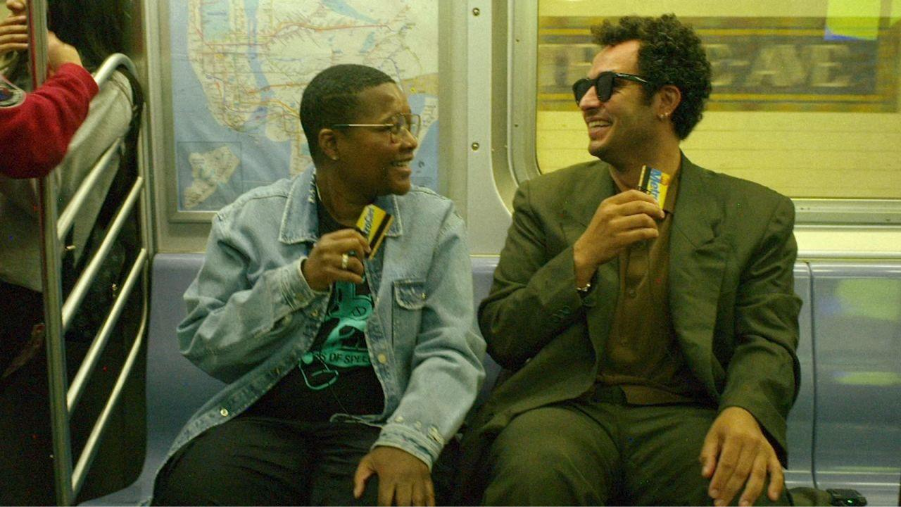
[The viral ‘Subway Takes’ video series, © Kareem Rahma]
The recent adverts for Avengers Doomsday were received poorly, because nothing happens in them. They are all essentially 80 second adaptations of the sentence “[X] Will Return in Avengers: Doomsday.”
Imagine that you’re working from home, you decide to pause that PowerPoint for a quick break. Maybe you’re following the Pomodoro Technique and taking your allotted 90 seconds, or maybe you’re having lunch and want to get straight back into it after you’re done eating. You could put a TV show on, but then you’ll finish your food and you’ll have just started an episode. You just want something entertaining and mildly stimulating, to refresh your brain and show you something new.
Maybe you watch one of Kareem Rahma’s ‘Subway Takes’ conversations that start with the ‘take’ (and whether Kareem agrees with it), moves onto a discussion around the take, and wraps up with a final say on the matter. These clips have a clear beginning, middle and end.
Maybe you want something more explosive, and you download one of the ‘microdrama’ apps that have been gathering millions of dollars of funding, like Holywater or Gammatime. Gammatime’s current ‘top trending’ series have amazingly bad names (‘Lust Cop’, ‘The Temptress’ and ‘The Vengeance Affair’) but at least you know that something is going to happen, you’re not just going to watch a beloved character brooding and thinking about big things that will happen in a movie 12 months from now.
Interestingly, TikTok has just debuted a new ad offering for streaming services wherein users see an interactive carousel of clips from different shows. It brings to mind the Netflix mechanism, whereby titles are previewed in-platform with a scene, a quick blast of something that happens in that title (not a trailer).
Hollywood needs to get better at treating marketing as part of the creative process, not as a teaser tacked onto the end of their production. What if the Avengers: Doomsday trailer showed what Thor’s morning routine looks like, now that he has a daughter? It doesn’t need to be explosive, but you need to respect the audience’s time; appreciate that they might not be overwhelmingly excited when they watch your trailer and show them something that stands on its own.
Trend 2: Companion Content
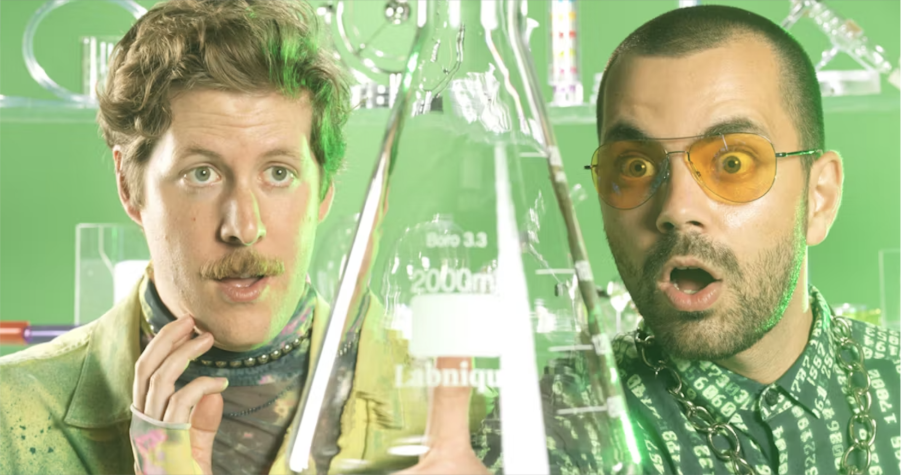
[Straightiolab, ‘The Gay Podcast About Straight Culture’, © iHeartRadio]
Music is the artform that matters most to me, but there have been times post-covid when it it felt like I needed something else. Thinking back to my commute the last time I had a stressful job, I often felt like my brain just wasn’t ready to enjoy music.
That is when I got really into podcasts, specifically podcasts that revolve around light, playful conversation. I was particularly hooked on one named Straightiolab, wherein two gay American comedians humorously dissect subjects that feel definitively straight to them. At the end of each pod, they take turns to ‘shout out’ something that they are enjoying right now, with the enthusiasm of a Bro shouting out to their squad back home.
I particularly loved the guaranteed positivity of that Shout Outs segment. You don’t learn much listening to these podcasts, but you know what kind of tone you can expect, it’s never going to get too deep. I could often feel my brain starting to make happy chemicals as I listened to Straightiolab, to the extent that I would sometimes switch to music because I knew that I was ready to appreciate it now.
‘Companion Content’ isn’t new - the reason that there are so many quiz shows on TV around the world is that they are cheap to make and always get viewers, they’re perfect for putting on in the background while you get on with your day. Netflix is currently trying to move into this world by buying a lot of sports-themed video podcasts, a potential double whammy as it can also help them stay relevant to the world of sports.
Again, this is a hard trend to apply directly to cinema, but there are lessons to be learned about marketing and the different ways that people want to feel right now.
Loneliness is more widespread than ever, the Cambridge Dictionary word of the year for 2025 was ‘Parasocial’, so it’s worth thinking about how you use talent and build out the world of your film.
The 18-minute Marty Supreme ‘Zoom Call’ worked so well as a playful marketing stunt because it was easy to get lost in – we’ve all been on Zoom calls, stuff like this is a lot easier to relate to than an Awards Show ceremony. It was also a form of marketing that made canny decisions about which aspects of the film to play on, building intrigue without asking viewers to contemplate the film’s deeper themes from their desks. You can save that stuff for the big screen, where it’s a lot easier to process.
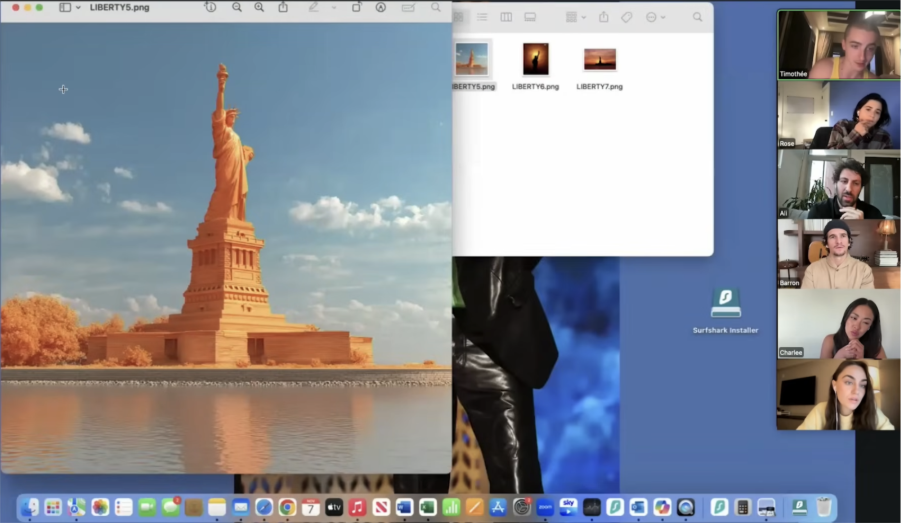
[The Marty Supreme ‘Zoom Call’ promotion video, © HBO, Warner Bros Discovery]
Trend 3: Agency Modelling
So far, I have discussed forms of entertainment that appeal when Brain Fog is thick and heavy; when people don’t have the time to watch anything longer than 90 seconds, or the bandwidth to process anything deeper than a comedy podcast.
But what about those moments later in the day, when you’re ready to actually watch something in full, you want to watch something that you can discuss with your friends, but you’re feeling spiritually drained. Who is serving you then?
Enter ‘The Pitt’, a medical drama set in Pittsburgh. Produced by HBO, it is by all accounts a normal TV show, and yet it has inspired a new genre tag in articles from the Washington Post and The Guardian; ‘Competency Porn’.
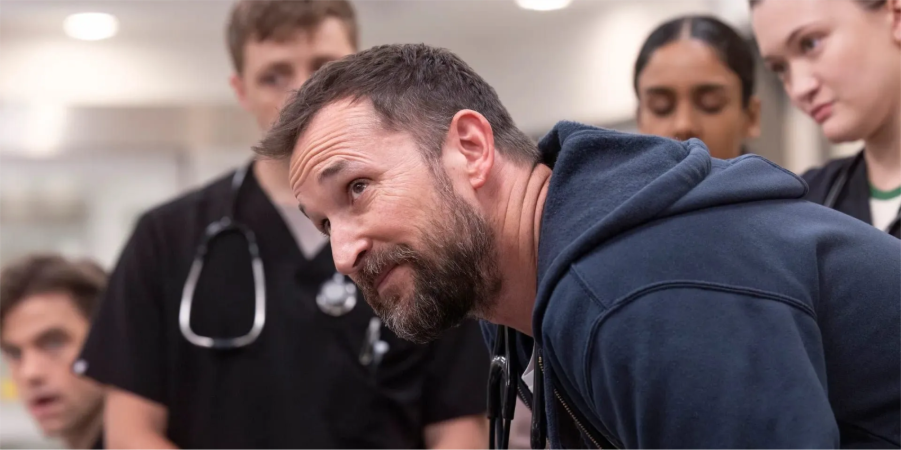
[Medical drama series The Pitt, © HBO, Warner Bros Discovery]
The idea is that the news is so destabilizing right now that people simply appreciate watching characters with a steady hand who are good at their (important) job. It harkens back to the USA’s ‘Blue Sky Network’ shows that aired from 2005-2016, with shows like ‘Psych’ and ‘Suits’ full of successful, intelligent professionals. No anti-heroes here, this is about following process and doing what is needed, competently.
You could apply the logic of ‘Competency Porn’ to recently successful TV show formats like ‘The Traitors’, which similarly focusses around problem solving, where the rules of right and wrong are very clear. This stuff particularly appeals to the literal, quick-hit ‘left brain’ thought processes primed by social media; we want to see answers to problems and strategies for success (marketing whizz Orlando Wood wrote a great book about this named ‘Lemon’).
At a deeper level, beyond the specifics of professional competency, there is something to be said for reminding people that it is possible to have agency in their lives, it is possible to achieve amazing things. There has been so much dark, gritty, serious art in the last decade, HBO shows like Game of Thrones, Succession and Industry that repeatedly punish their protagonists’ ambition. It makes sense that people are excited by the prospect of a prestige TV show for grown-ups that also won’t turn around and punch them in the face.
My lesson for Hollywood would be to think about what it takes to inspire adults. Think of 90s megahits like Forrest Gump, Jerry Maguire or Mrs Doubtfire, and look at the way they were marketed, the tone that their campaigns implied. We’re long overdue an accessible but grown-up film that empowers its viewers.
Trend 4. Community Engagement
Last but not least, we come back around to the K-Pop model, the hardest but most effective way to engage depleted, brain-fogged audiences: stop thinking about them as one audience and try to connect with them more directly.
The biggest exception to the “movies don’t have superfans” truism is in Horror. Fans of gore, jump-scares and frights have historically been highly loyal to creators, and last year, horror movie director Eli Roth launched a ‘fan-owned studio’ named “The Horror Section“, sharing royalties with investors.
[‘Fan-owned’ Horror Studio, © Eli Roth]
What I find particularly interesting about Eli Roth’s project is the promise to develop a particular kind of dark, ‘unrated’ horror movie, to differentiate his studio. This isn’t about leveraging safe, reliable IP, it’s about committing to give a certain kind of fan what they really want.
This reflects a trend for small independent film clubs across the UK (Paraphysis Cinema, Deeper Into Movies, Speed and Strike) hosting screenings of previously released films, selected because they feel like they have something to say to viewers now.
It would be great to explore more different ways of curating studios’ huge back-catalogues and hosting them in cinemas, without waiting for the cinemas themselves to request it. It takes years to develop a new movie, but curation can happen at light speed. Why not respond to the popularity of a film like Marty Supreme by pitching out to theaters the screening of iconic sports films with iconic scores like Chariots of Fire or Challengers? Or respond to developments in AI by screening thoughtful films like Her and Ex Machina?
As for new releases, I find myself thinking of two of my favourite films (and success stories) from recent years; Sinners and Barbie. I don’t belong to either of the communities that those films were written about, but I really appreciated that they had something to say, and I enjoyed how much joy they found by leaning heavily into characteristic tropes, with adventurous music and costume design.
All of which is to say, there are a lot of ways for the studios to engage and collaborate with communities in 2026. Whichever way they choose, the impact comes from to making viewers feel connected to something bigger than themselves, and to feel connected with the rest of the world.
We’re living through a time of deep confusion, so it is art’s job to light a way through the fog.

[Sinners, the most Oscar-nominated film of all time, © Warner Bros. Pictures/WBD]
Really great piece Will! Love it 🔥
The competency porn angle is interesting, especially as escapism from constant bad news. I've noticed this same pattern with how people engage with tutorial content lately, there's an appetite for watching someone who knows what they're doing just do it well. The microdrama trend feels like it could work for traditional studios if they stopped treating every piece of content like it needs franchise potential. Sometimes a 90 second complete story is enough.